If you live with diabetes, we know the holidays can feel like a balancing act. Family recipes, late dinners, and long drives are meant to bring joy, but they can pull you away from the routines that helps you in managing blood sugar.
If you have ever felt a flicker of worry looking at the holiday table, you are not alone. It says nothing about your willpower.
Our care team wants you to know that managing diabetes during the holidays does not mean sitting out the celebration. With a little planning and the right support, you can enjoy the season and protect your health. New to all this? Start with
what diabetes is, then come back.
The seven diabetes holiday tips below follow theAmerican Diabetes Association's
holiday guidance and the CDC's advice. We wrote them to help you feel steady from the first party through the New Year.
Plan Your Holiday Diabetes Care with Us
Why the Holidays Make Diabetes Management Harder
Food gets the blame, but it is rarely the only problem. Meals run bigger and later than usual. Sleep gets cut short. The walk you take after dinner disappears under dishes, guests and a drive across town.
Stress climbs, and stress hormones raise blood sugar all by themselves, no dessert required. Then there is the relative who insists you have seconds. Alcohol adds one more variable, because it can push glucose in either direction.
None of that means you are doing something wrong. The season simply stacks a dozen small challenges on top of each other. As the American Heart Association says, diabetes control at the holidays isn't about perfection. One heavy meal will not undo months of steady work. What counts is what you do the rest of the time. Here are 7 tips to help you stay on track while still enjoying the holiday festivities.
1. Plan Ahead for Holiday Meals and Parties
Eat breakfast and lunch the way you normally would. Skipping meals to save room for dinner is a common move and a poor one. It tends to set up a low, then a big, fast meal that doesn’t help with your blood sugar management.
If you are a guest, ask the host what is being served. Offer to bring a dish that fits your diabetes meal plan, so at least one thing on the table works for you.
Once you are there, use the
plate method: half the plate non-starchy vegetables, a quarter lean protein, a quarter carbohydrate foods. Eat the vegetables and protein first, and you are less likely to overdo the stuffing.
Every body reacts differently to food, medication and timing, which is why diabetes meal planning works best when it is built around you. Clinical nutrition counseling is one way to do that.
If you want a plan that fits your medications and the foods your family actually cooks, talk with one of our primary care providers before the big day.
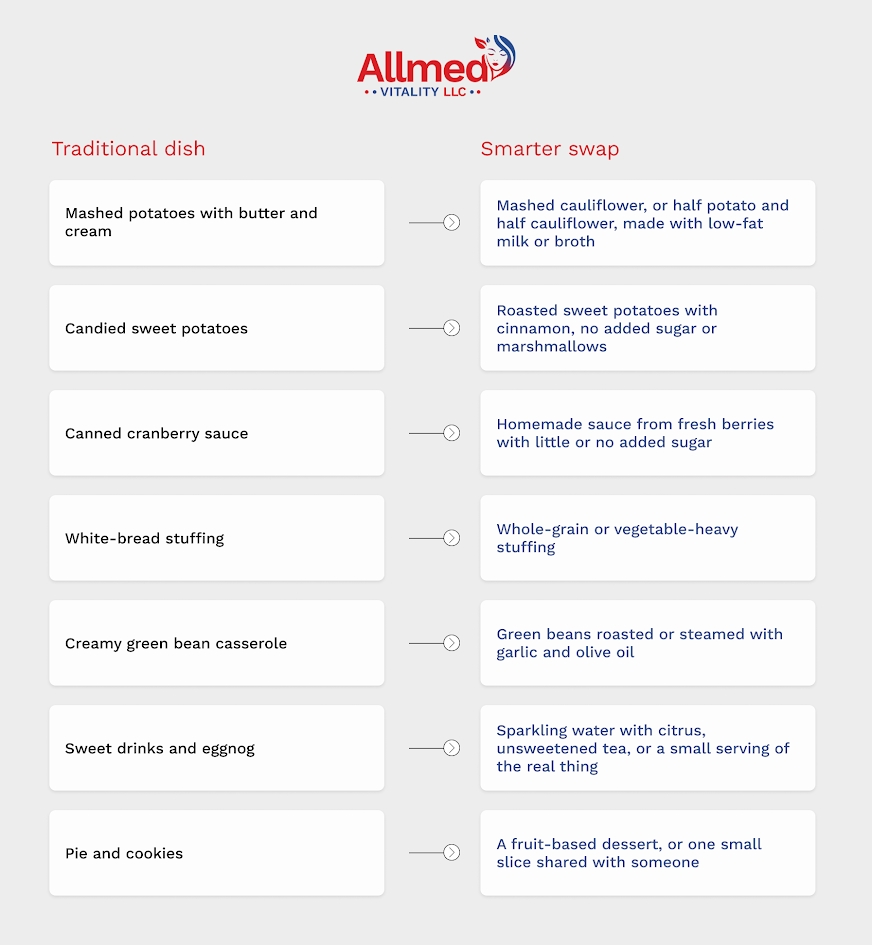
2. Make Smart Swaps for Traditional Holiday Dishes
You do not have to give up the dishes that make the holidays feel like the holidays. A few changes to a recipe can cut sugar and refined carbohydrates without anyone at the table noticing.
3. Stay Active During a Busy Holiday Schedule
Movement helps your body use insulin more effectively, and it is one of the cheapest stress relievers there is. A 10- to 15-minute walk after a meal can take the edge off a blood sugar spike.
You do not need a gym. Suggest a loop around the block before pie. Park at the far end of the lot. Stretch while the turkey rests. Some movement beats none.
If you take insulin or another medication that can cause low blood sugar, check your glucose before and after exercise and keep a fast-acting carbohydrate within reach.
4. Manage Blood Sugar While Traveling
Travel scrambles everything: meal times, medication timing, sleep. If you are
traveling with diabetes, pack as if something will go wrong, because delays happen.
- Bring twice the medication, insulin, test strips, lancets, pen needles, and spare batteries you think you will need.
- Keep all of it in your carry-on. Checked bags get lost, and a cargo hold can get cold enough to damage insulin.
- Carry original labeled prescriptions and a letter from your doctor. It speeds up security.
- Pack snacks that travel well, such as nuts, cheese, fruit, and glucose tablets.
- Crossing time zones? Ask us how to adjust medication timing before you leave.
- Drink water, and check your blood sugar more often than usual.
A short visit before you go makes sure your refills and your backup plan are in place. Book a pre-travel visit with our primary care team and leave with one less thing to worry about.
5. Go Easy on Alcohol
Alcohol makes blood sugar harder to predict. It can cause a low, sometimes hours after the last drink, especially if you take insulin or certain diabetes medications. Holiday cocktails and eggnog are also loaded with sugar.
Ask your provider whether alcohol is safe for you at all. If it is, never drink on an empty stomach. Choose lower-sugar options like a light beer, dry wine, or spirits with a zero-sugar mixer, alternate with water, and check your glucose before bed. If you use insulin, wear a medical ID.
6. Protect Your Sleep and Your Peace of Mind
Stress and short sleep both raise blood sugar. You do not have to host, bake and attend everything. Pick the events that matter to you and say no, kindly, to the rest. Keep your bedtime close to normal even when the house is full. Five minutes of slow breathing or a quiet cup of tea between events counts.
If the season starts to feel like too much, tell someone: a friend, a relative, your provider. Emotional health is part of diabetes care, and we take it seriously.
7. Check In With Your Doctor Before the New Year
December is a smart time for a diabetes checkup. At that visit, your provider can:
- Review your A1C and recent blood sugar readings
- Adjust medications or insulin doses if needed
- Refill prescriptions and supplies before offices and pharmacies close for the holidays
- Check your feet, eyes, kidneys and blood pressure
- Update vaccines, including your flu shot
Many diabetes complications develop quietly, which is why we push early detection so hard. Read more about preventing long-term diabetes complications.
If you are at risk but not yet diagnosed, see how you can stay ahead of type 2 diabetes with early detection and support. And put your annual checkup on the calendar before the year gets away from you.
Care That Does Not Take a Holiday
Getting through the holidays with diabetes comes down to a handful of habits. Remember to eat on schedule, plan your plate, move after meals, pack carefully, go easy on alcohol, protect your sleep, and see your doctor before the year ends.
You will have off days, and that is okay. Come back to the plan at your next meal.
At Allmed LA, our primary care services include diabetes screening, medication management, and practical guidance on nutrition and daily habits, so you never have to do this alone.
If you want help with a meal plan or a medication check before travel, visit Allmed LA's clinic, and we will take it from there.
Need Help with Your Diabetes Meal Planning?
Frequently Asked Questions
Can I eat dessert if I have diabetes?
Usually, yes, and you do not need to feel guilty about it. What matters is portion size and how the dessert fits into the carbohydrates in your meal. Choose a small piece, eat it slowly, and consider a fruit-based option. Your provider can tell you what works for you.
How often should I check my blood sugar during the holidays?
Many people do better checking more often than usual, especially before and after large meals, while traveling and after drinking alcohol. It can feel like a chore in the middle of a party, but those numbers help you and your provider see what is really going on. Ask us what schedule fits you.
What should I do if my blood sugar is high after a big meal?
First, take a breath. One high reading after a big meal is common and does not mean you failed. Drink water, take a short walk if it is safe for you, and follow the plan your provider gave you. If readings stay high, or you notice extreme thirst, nausea, vomiting or confusion, contact your provider or seek urgent care right away.
Is it okay to skip a meal before a holiday feast?
We do not recommend it, even though it feels like a sensible way to make room for dinner. Skipping meals can cause low blood sugar, especially on certain medications, and it often leads to overeating later. Keep your normal schedule.
Can I travel with insulin and diabetes supplies?
Yes, and with a little preparation it is far less stressful than it sounds. Keep everything in your carry-on, store insulin properly, carry your prescriptions and bring extra supplies in case of delays. If a trip has you nervous, we are happy to talk it through before you go.