If you are reading this, you may be thinking about your own health or the health of someone you love. First, we want you to know that taking this step is something to be proud of. Many women feel nervous about breast cancer screening, and that feeling is completely understandable.
At Allmed LA, we believe
preventive care should feel supportive instead of frightening. Our team takes the time to listen, answer your questions, and move at a pace that feels comfortable for you. You deserve clear information delivered with kindness.
This guide covers breast cancer tests screening options, the early signs of breast cancer, and the right time to begin. It is especially timely during Breast Cancer Awareness Month, when many women across Los Angeles are reminded to book overdue appointments. Read one section at a time, and reach out whenever you feel ready.
Learn more about breast cancer screening
Which Tests Do Women Need and When?
The right tests depend on your age, your family history, and your overall health. No single schedule fits every woman. Still, national guidelines offer a helpful starting point for your conversation with a doctor.
The table below summarizes common recommendations for women at average risk who have no symptoms. Organizations differ slightly, which is why a personal discussion matters so much. Think of this as a map rather than a strict rule.
Women with a higher risk may need extra tests, such as an MRI, which we explain later in this guide. These schedules also apply only when you feel well. If you notice a change in your breasts, please call your doctor right away instead of waiting for your next screening. You can read the full national recommendations on the National Cancer Institute's screening page.
Why Early Detection of Breast Cancer Matters
When breast cancer is found early, it is often smaller and easier to treat. Many women then have more options, including less extensive surgery. That is the heart of early detection of breast cancer.
Breast cancer screening, one of the strongest tools we have, can reveal changes long before you could ever feel a lump. A mammogram may pick up tiny calcium deposits or small masses that hands simply cannot detect.
Early detection brings emotional relief too. Finding a concern sooner often means a shorter wait and a clearer plan. Whether your results are normal or need follow-up, our team will stand beside you the whole way.
When Should Women Start Breast Cancer Screening?
For women at average risk, most guidelines point to age 40 as the time to start the conversation. Some women begin yearly mammograms at 40, while others wait until 45. Neither choice is wrong, and your doctor can help you decide.
Bringing a few notes to your visit can make the conversation easier. Here is a simple checklist to prepare:
- Names of relatives who have had breast, ovarian, or prostate cancer, and their ages at diagnosis
- Any past breast biopsies, lumps, or abnormal mammograms
- Whether you have ever had radiation to the chest
- Current medications, including hormone therapy
- Questions or worries you want answered
Regular checkups also make screening easier to remember. Learn more in our guide to the benefits of annual wellness exams.
What Are the Different Types of Breast Cancer Screening?
There are several types of breast cancer screening, and each plays a different role. Most women will need a mammogram, while others benefit from added imaging. Knowing the options can make the process feel less mysterious.
A 3D mammogram can be especially reassuring for women who have been called back for extra pictures. Being called back is common, and the vast majority of those women do not have cancer. It simply means the radiologist wants a closer look.
Breast density is another topic worth discussing. Dense tissue can make small changes harder to see on a standard image. Ask your provider whether added testing makes sense for you, and explore our primary care services to learn how we can help coordinate your care.
What Are the Warning Signs of Breast Cancer?
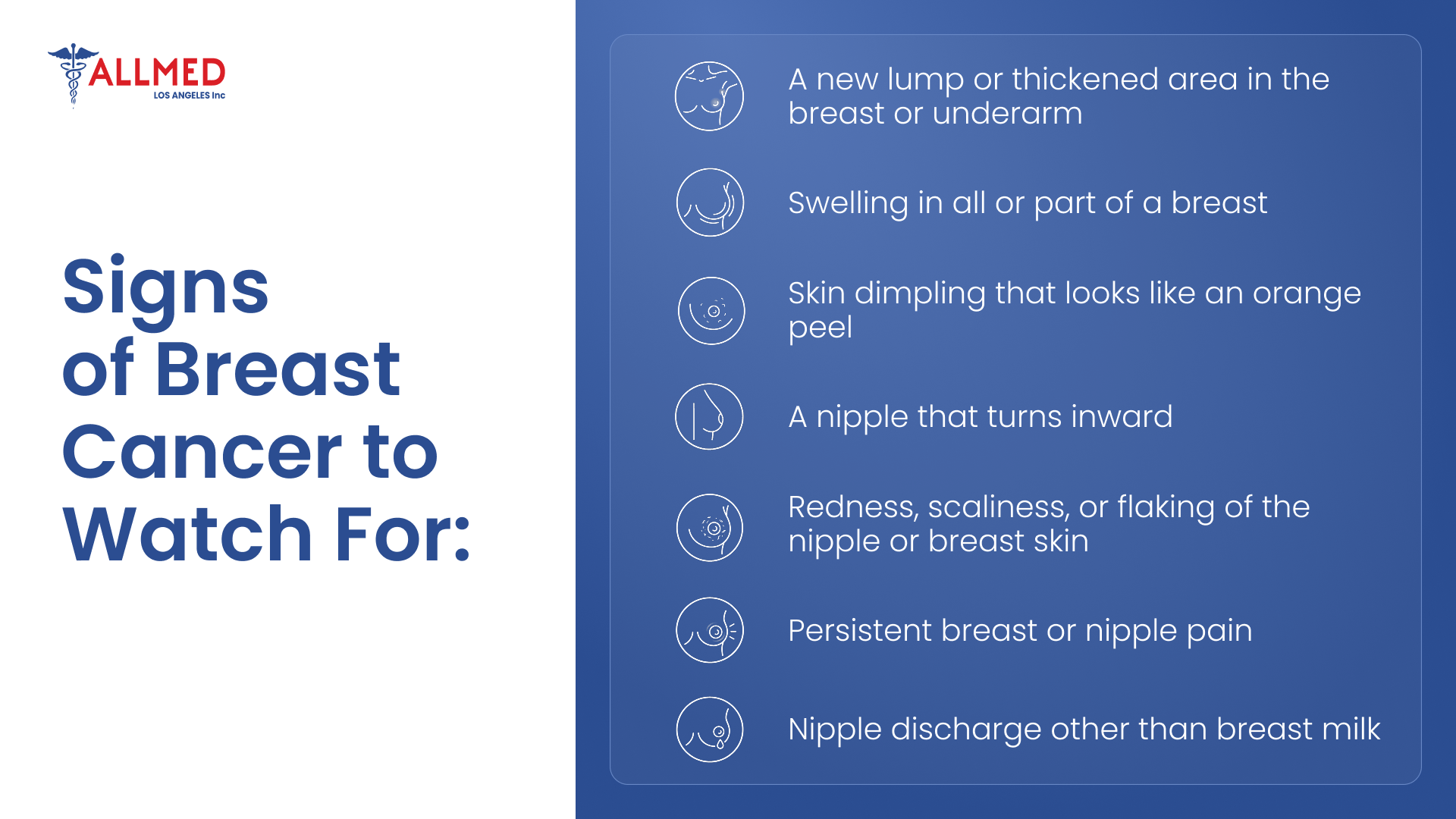
Many women first wonder about breast cancer symptoms after noticing something unusual. Remember that most breast changes turn out to be harmless. Still, any new change deserves attention, and you should never feel embarrassed to ask.
The sign and symptoms of cancer of the breast can look different for each woman. Some women notice nothing at all, which is exactly why screening matters. Our guide to these early signs of breast cancer is meant to inform you, not frighten you.
If you notice any warning signs of breast cancer, please
schedule an appointment promptly. Waiting and worrying alone is a heavy burden, and we would gladly carry some of it with you. Early evaluation brings answers, and answers bring peace of mind.
Who May Need Earlier or More Frequent Screening?
Some women have a higher chance of developing breast cancer and may need to start sooner. This does not mean something is wrong. It simply means a more personalized plan can offer you extra protection.
Factors that may raise risk include:
- A known BRCA1 or BRCA2 gene change
- A strong family history of breast or ovarian cancer
- Radiation therapy to the chest before age 30
- A personal history of breast cancer or certain breast conditions
- Very dense breast tissue
For women with a lifetime risk of about 20 percent or higher, the American Cancer Society suggests a yearly MRI along with a mammogram. This often begins around age 30. Susan G. Komen's risk factor guide offers more detail on how risk is understood.
Please remember that risk is not destiny. Many women with risk factors never develop breast cancer, and many women without them do. Your provider can walk you through your numbers gently and build a plan that fits your life.
When Should Women Start Getting Mammograms, and How Often?
If you are asking when should women start getting mammograms, the short answer is usually between 40 and 45. Your personal history may shift that timeline earlier. A conversation with your doctor will help you choose confidently.
As for how often should women get mammograms, most average-risk women screen every one to two years. Yearly screening is common from 45 to 54, then many women switch to every two years.
A
mammogram usually takes about 20 minutes, and the compression lasts only a few seconds. Here are a few tips to help you feel at ease:
- Schedule the exam for the week after your period, when breasts are less tender
- Skip deodorant, powder, and lotion on the day of your visit
- Wear a comfortable two-piece outfit
- Bring any prior images from another facility
- Tell the technologist if you feel anxious or uncomfortable
If this is your first time, our guide on what to expect during your first primary care visit can help you feel prepared.
How Allmed LA Supports Women's Preventive Healthcare
At Allmed LA, we see you as a whole person, not just a schedule of tests. Our providers take time to understand your history, your fears, and your goals. That caring foundation is what makes preventive healthcare truly work.
Breast health is one piece of a bigger picture. We also encourage women to stay on top of heart health screenings, because heart disease is a leading health threat for women.
Choosing the right provider makes every step easier. If you are searching for a “primary care doctor near LA,” our guide to primary care doctors in Los Angeles can help. You can also meet our primary care providers and see who feels like the right fit.
Breast cancer screening is one of the kindest things you can do for yourself and your family. It can feel overwhelming at first, but each step becomes easier with the right support. You do not have to figure it out alone.
Remember the key points: start the conversation around age 40, know your family history, and pay attention to changes. Share your questions openly, because no concern is too small. Early detection gives you the best chance at simple, effective care.
We would be honored to be part of your health journey. Whether you are due for a mammogram or just beginning to ask questions, our doors are open. Reach out to Allmed LA, and let us care for you with warmth and respect.
Take a proactive step for your health
Frequently Asked Questions
Most women feel pressure rather than sharp pain, and it lasts only a few seconds. Discomfort varies from person to person. Let the technologist know if you need a pause, and they will gladly help.
Can I get screened if I have no symptoms?
Yes, and that is exactly what screening is for. Mammograms are designed to find changes before you feel or see anything. Feeling healthy is a good reason to screen, not a reason to skip.
What if my mammogram result is abnormal?
An abnormal result does not mean you have cancer. Many women are called back for more images, and most turn out to be fine. Your provider will explain every next step clearly and gently.
How do I book breast cancer screening in Los Angeles?
Start with a visit to your primary care provider, who can review your risk and arrange the right tests. At Allmed LA, our team can guide you through the process. You can find our clinic details on our locations page.