Thanksgiving dinner can get busy fast. The turkey is in the oven, someone is working on the mashed potatoes, and there's always another dish that needs attention. Add guests arriving at different times and a kitchen full of people, and it's easy to lose track of how long food has been sitting out.
This happens in plenty of households, especially when everyone is focused on getting dinner ready. Still, a little care with food preparation and storage can help prevent foodborne illness. It also helps keep your family from spending the holiday dealing with an upset stomach.
From festive prep to serving, let's talk about the things worth watching out for. We'll also cover the signs of food poisoning and when it's time to get medical help.
Need a Health Checkup Before Thanksgiving?
Common Causes of Foodborne Illness on Thanksgiving
A lot of Thanksgiving food safety problems begin with small oversights. Maybe the turkey hasn't cooked all the way through, or the stuffing was taken out of the oven before reaching a safe temperature. Sometimes, raw turkey juices end up on a cutting board that's later used to prepare vegetables.
Food left on the dining table for several hours is another concern. Bacteria grow quickly between 40°F and 140°F, a range known as the temperature danger zone. The longer perishable food stays within that range, the greater the chance that bacteria will multiply.
Raw poultry can carry Salmonella and Campylobacter.
Clostridium perfringens is another concern, particularly when large portions of cooked food sit at room temperature or cool too slowly.
Food poisoning can affect anyone. However, young children, older adults, pregnant people, and those with weakened immune systems or chronic conditions have a
greater risk of serious complications. Ensuring food safety for Thanksgiving starts the moment you buy groceries. The following section deals with food safety tips for Thanksgiving.
Turkey safety tips: Thawing, handling, and cooking temperatures
The turkey usually takes up a good part of the preparation time, so it's worth getting this step right. Whether you've bought a fresh bird or have one waiting in the freezer, here's what you need to know.
Thaw your turkey safely.
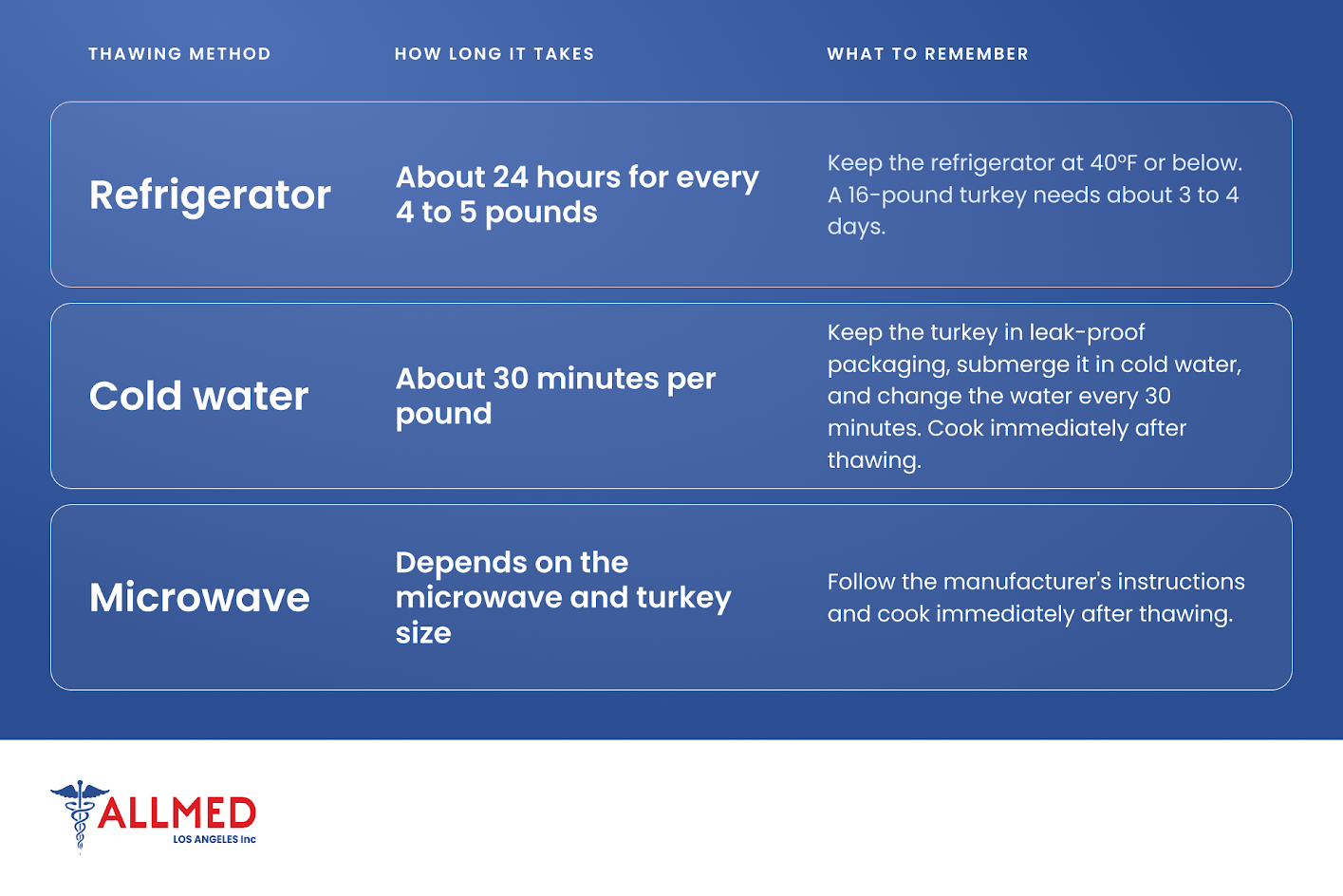
Have you already taken your turkey out of the freezer? A cardinal rule in food safety for Thanksgiving is making sure you have enough time for it to thaw properly. Leaving it on the kitchen counter might seem like the quickest solution, especially when you're running behind, but this allows the outer portions to reach temperatures where bacteria can grow.
Never thaw a turkey on the kitchen counter. The outer portions can reach temperatures that allow bacteria to multiply while the inside is still frozen.
Keep raw turkey away from other foods.
Here's a common kitchen habit worth changing: washing raw turkey before cooking.
You might have seen family members do this for years, but rinsing poultry can actually spread bacteria. Water splashes can carry germs onto the sink, nearby countertops, utensils, and other food.
There's no need to wash the turkey. Cooking it properly takes care of harmful bacteria.
After handling raw poultry, wash your hands with soap and running water for at least 20 seconds. Also, keep a separate plate and set of utensils ready for the cooked turkey. Never put the cooked bird back on a plate that held it while raw.
Make sure the turkey reaches 165°F.
A browned
turkey can look ready before the meat has cooked all the way through. The only reliable way to check is with a food thermometer.
The turkey should reach an internal temperature of 165°F. Check the thickest part of the breast, the innermost part of the thigh, and the innermost part of the wing.
If you've stuffed the turkey, the stuffing needs to reach 165°F as well. Baking it separately is often easier because you can check its temperature without worrying about whether the meat is done. Once the turkey is cooked, let it rest for about 20 minutes before carving.
Have a Health Question before the Holiday?
How to Avoid Cross-Contamination in the Kitchen
When you're preparing several dishes at once, it's easy to use the same knife or cutting board without thinking. But if that equipment has touched raw poultry, bacteria can transfer to other ingredients.
This is particularly concerning for foods such as salads, fresh fruit, and desserts that won't go through another cooking step.
Keep in mind these
four basic food safety practices on how to avoid cross-contamination: clean, separate, cook, and chill. Here's how to apply them while preparing your Thanksgiving meal.
- Keep separate cutting boards and knives for raw poultry and other ingredients.
- Wash countertops, utensils, and cutting boards with hot, soapy water after handling raw turkey. Sanitize food-contact surfaces when appropriate.
- Wash your hands after touching raw meat, taking out the garbage, handling pets, or using the bathroom.
- Place raw turkey in a container on the bottom shelf of the refrigerator. This prevents its juices from dripping onto other food.
- Clean your food thermometer between uses, especially when checking different dishes.
You may need to pause between kitchen tasks to wash your hands or clean a surface. That's perfectly fine. It's better to take an extra minute than risk contaminating food that's already prepared.
Proper storage and leftover safety tips
After everyone has eaten, the kitchen probably looks a little different. There may be half a tray of turkey, leftover vegetables, and containers waiting to be filled.
Before settling in for the evening, take care of the food. Perishable dishes should go into the refrigerator within two hours of serving. If the temperature is above 90°F, the limit drops to one hour.
Don't leave food on the table while everyone watches a movie or catches up with family. It can stay out longer than you realize.
When storing your Thanksgiving leftovers:
- Divide large portions into shallow containers. Smaller portions cool faster than one large container.
- Remove turkey meat from the bones and store it separately.
- Keep hot dishes hot with warming trays or slow cookers. Cold dishes should stay chilled, such as over ice.
- Eat refrigerated leftovers within three to four days. Freeze anything you won't finish within that period.
- Reheat leftovers to 165°F. Stir soups, gravies, and other dishes so they heat evenly.
One more thing: don't rely on smell or appearance to decide whether leftovers are safe. Food can contain harmful bacteria even when it looks and smells perfectly fine. If you can't remember when it was put away or how long it sat out, it's safer to discard it.
Planning a holiday menu for someone managing a chronic condition? Our article on
how nutritional guidance supports chronic disease management may also help you make informed food choices.
Signs of food poisoning and when to seek help
Even when food is prepared carefully, food poisoning can still occur. Sometimes the signs of food poisoning appear within a few hours. In other cases, it may take several days before someone starts feeling sick.
You might notice nausea, vomiting, diarrhea, stomach cramps, or a fever. Headaches and fatigue can occur, too. Some people also experience bloody diarrhea.
Many otherwise healthy adults recover within a few days. Drinking enough fluids is important, especially if vomiting or diarrhea causes fluid loss. Water, broth, and oral rehydration solutions can help replace lost fluids.
There are times, though, when home care isn't enough. Seek medical attention if you or a family member develops:
- A fever of 102°F or higher
- Bloody stools
- Diarrhea that lasts more than three days
- Frequent vomiting that makes it difficult to keep liquids down
- Signs of dehydration, including very little urine, dry mouth, dizziness, or a fast heartbeat
- Severe stomach pain
Pay closer attention to infants, older adults, pregnant people, and anyone with diabetes, a weakened immune system, or another chronic condition. These individuals may need medical attention sooner because foodborne illness can lead to more serious complications.
If someone becomes confused or faints, seek emergency medical care.
Not sure whether your symptoms need attention? Our
primary care team can help evaluate your concerns and determine what kind of care may be appropriate. Don't hesitate to reach out if you're worried about someone in your family.
Enjoy Thanksgiving with Your Family
You probably have enough to think about when preparing Thanksgiving dinner. Food safety doesn't have to make the day more stressful. Just remember to give your turkey enough time to thaw, check its temperature before serving, and put perishable dishes away before they've been sitting out too long.
At
Allmed LA, we care about helping families stay healthy throughout the year, including during the holidays. Our primary care clinics offer preventive care, nutrition guidance, and care for acute illnesses.
If you have questions about your health or start feeling unwell after the holiday, our healthcare team is here to help. We hope you and your family have a safe and happy Thanksgiving!
Stay Healthy This Thanksgiving
Frequently Asked Questions
How long can Thanksgiving food sit out?
Perishable food can stay at room temperature for up to two hours. If the temperature is above 90°F, refrigerate it within one hour. It's easy to lose track of time when everyone is still at the table, so setting a phone reminder can help.
Is it safe to thaw a turkey on the counter?
No. The outside of the turkey can reach temperatures that allow bacteria to grow while the inside is still frozen. Thaw it in the refrigerator, in cold water, or in the microwave instead. If you're short on time, cold water thawing is a faster option.
Should I wash my turkey before cooking?
No. Washing raw turkey can spread bacteria through splashing water, which may contaminate your sink and nearby kitchen surfaces. You can skip this step. Cooking the turkey to an internal temperature of 165°F will destroy harmful bacteria.
How do I know when my turkey is done?
Use a food thermometer rather than relying on the color of the meat or a pop-up timer. Check the thickest part of the breast and the innermost parts of the thigh and wing. Each should reach 165°F. Stuffing cooked inside the turkey must reach the same temperature.
How long are Thanksgiving leftovers good for?
Refrigerated leftovers are generally safe for three to four days when stored properly. If you don't plan to eat them within that time, freeze them. When you're ready to serve them again, reheat to 165°F.