Maybe you’ve spent years feeling disorganized, restless, or one step behind everyone else. That doesn’t make you lazy, and it doesn’t mean something is wrong with you. Plenty of people live with ADHD in adults for decades before anyone names it, and finally having a name can bring a lot of relief.
At Allmed LA, we try to make every visit feel safe. We listen first, and we don’t judge. That includes the struggles you’ve kept quiet about for a long time.
This guide walks through the signs of ADHD in adults, what causes it, and how an evaluation works. We also cover treatment and a few everyday habits that can help. If some of this sounds familiar, reaching out is a good step to take.
Wondering if you have ADHD?
What Are the Common Signs of ADHD in Adults?
ADHD doesn’t look the same in adults as it does in kids. The bouncing-off-the-walls energy often turns into an inner restlessness. Trouble with focus and organization usually sticks around, and many adults are surprised to learn their lifelong habits have a name.
Seeing yourself in a few of these doesn’t mean you have ADHD. Everybody forgets things and gets distracted now and then. With ADHD, the patterns last for years and get in the way of work, relationships, or home life.
Many adults carry a quiet shame about all this. They assume they just aren’t trying hard enough, even when they’re trying constantly. ADHD is a real health condition, and it says nothing about your character.
What Are the ADHD Symptoms in Adults?
Doctors sort the symptoms of ADHD into two groups: inattention and hyperactivity-impulsivity. Some people mostly have one type, and others have a mix. Knowing your pattern helps your provider choose the right kind of care.
Common inattentive symptoms include:
- Trouble keeping your attention on tasks or conversations
- Careless mistakes from rushing or missing details
- Difficulty following through on projects
- Losing everyday items again and again
- Putting off tasks that take long mental effort
- Forgetting parts of your daily routine
Hyperactive and impulsive symptoms can include fidgeting, talking a lot, or feeling unable to sit still. Adults may also interrupt others or find it hard to wait their turn. These can be easy to brush off as personality quirks.
For an adult diagnosis, clinicians look for several symptoms that began in childhood. The symptoms have to show up in more than one setting, like work and home. They also have to interfere with daily life.
What Causes ADHD in Adults?
Research hasn’t found one single cause of ADHD. It seems to come from a mix of factors, including genetics and brain development. Genes play a big part, and ADHD often runs in families.
Other factors can include being born early, low birth weight, or exposure to tobacco or alcohol before birth. The Mayo Clinic also notes that certain brain injuries may play a role. None of these are things you chose or could have changed, which is worth remembering if you tend to blame yourself.
It also helps to know what doesn’t cause ADHD. Poor parenting, laziness, and a lack of willpower aren’t to blame. Sugar and screen time aren’t the cause either.
Many adults are diagnosed late because their symptoms were overlooked as kids. Women are missed especially often, since their signs tend to be quieter. If that sounds like you, you’re in good company, and it’s never too late to ask questions.
Who Should Consider an ADHD Evaluation?
You may want to talk with a provider if any of these sound like you:
- You struggle to finish tasks even when you’re really trying
- Focus or organization problems are hurting your work
- Forgetfulness or impulsivity is straining your relationships
- Everyday responsibilities leave you feeling constantly overwhelmed
- Your child was recently diagnosed, and their symptoms sound familiar
- Anxiety or low mood hasn’t improved with other treatment
ADHD symptoms in adults
can overlap with anxiety, depression, sleep problems, and thyroid conditions. That overlap is one big reason a professional evaluation matters. An online quiz can easily miss what’s really going on.
Your primary care provider is a good first stop. They can hear your concerns, look over your health history, and check for other causes. If you’re still choosing a doctor, our guide to finding the right primary care doctor can help.
A 3D mammogram can be especially reassuring for women who have been called back for extra pictures. Being called back is common, and the vast majority of those women do not have cancer. It simply means the radiologist wants a closer look.
Breast density is another topic worth discussing. Dense tissue can make small changes harder to see on a standard image. Ask your provider whether added testing makes sense for you, and explore our primary care services to learn how we can help coordinate your care.
What Happens During an Adult ADHD Evaluation?
It’s normal to feel nervous before an evaluation. Knowing what to expect often takes some of the edge off. Mostly, it’s a respectful conversation about your life.
A typical visit looks like this:
- Talking through your concerns.
You describe your struggles and how long they’ve been going on.
- Reviewing your history.
Your provider asks about childhood, school, work, and family health.
- Completing questionnaires.
Rating scales help measure your symptoms in a structured way.
- Checking your overall health.
A physical review helps rule out other conditions.
- Discussing next steps.
You and your provider go over the findings and options together.
Sometimes a clinician will ask to hear from a partner, parent, or close friend. Their view can add helpful detail about your childhood and current habits. It only happens with your comfort and consent.
How Is ADHD Diagnosed?
No single blood test or scan confirms ADHD. Instead, how to diagnose ADHD in adults comes down to a careful look at your symptoms, history, and daily functioning. A trained clinician puts the full picture together.
Providers often follow criteria from the American Psychiatric Association. Adults usually need five or more symptoms in at least one category. Those symptoms must have started in childhood and cause real problems in more than one setting.
A thorough process also looks for other explanations. Anxiety, depression, and sleep apnea can mimic or worsen attention problems.
Some people are referred to a psychiatrist or psychologist for a deeper assessment. Your primary care team can guide that step and keep your care connected. You won’t have to sort it out on your own.
What ADHD Treatment Options Are Available?
The encouraging news is that ADHD treatment works, and most adults notice real improvement. Care is personal, so what helps your coworker may not be right for you. Many people use more than one approach.
Learning how to treat ADHD in adults starts with a talk about your goals. Your provider will consider your health history, other medications, and what matters to you. Your provider and you make any medication choice and
treatment plan together, with careful follow-up.
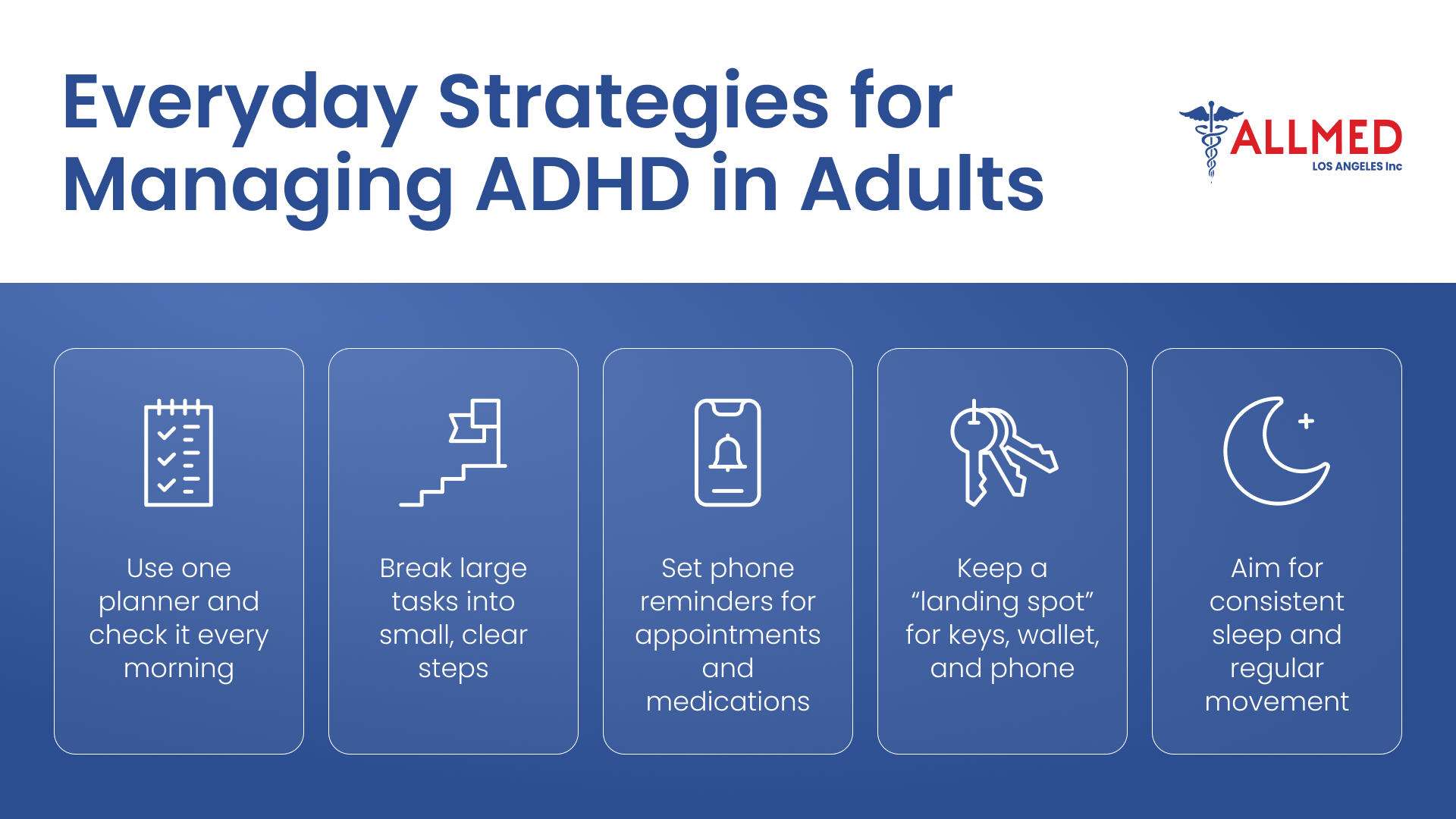
How Can Adults Manage ADHD Symptoms in Daily Life?
Small, steady habits can make a real difference alongside professional care. Nobody expects you to be perfect. The aim is a day-to-day life that feels a bit easier to handle.
The people around you can help too. Telling a trusted friend or coworker how you work best can ease a lot of tension. Many adults also find comfort in support groups, where others simply get it.
Regular health visits help you stay on track. Our
annual checkup guide explains why they matter.
How Allmed LA Supports Adults Seeking ADHD Care
Living with undiagnosed ADHD can wear you out. Understanding it often changes how you see yourself. The signs are real, none of this is your fault, and help is available.
At Allmed LA, no one will judge you for asking about ADHD. Our providers listen closely and treat you with respect. Your experience counts, and your questions are always welcome.
As a primary care clinic, we can review your symptoms and check for other health conditions. We can also talk with you about what comes next. If you need a specialized assessment, we’ll help connect you with the right people through our healthcare services.
If this guide sounded like your story, consider scheduling an evaluation. Jot down a few examples of what you’ve struggled with and bring your questions. Each conversation gets you closer to clarity.
Questions about adult ADHD?
Frequently Asked Questions
Can you develop ADHD as an adult?
ADHD begins in childhood, but many people aren’t diagnosed until they’re adults. If you’ve struggled with focus or organization for years, an evaluation may give you answers. At Allmed LA, we provide ADHD care to help you manage symptoms and daily challenges.
Who can diagnose ADHD in adults?
A primary care provider can evaluate your concerns and talk through treatment options. At Allmed LA, we work with you on a care plan that fits your symptoms, health history, and needs.
Is adult ADHD the same as being disorganized?
No. Everyone struggles with organization sometimes, but ADHD involves symptoms that stick around and affect daily life. If these challenges are disrupting your routine, our team can help you understand whether ADHD may be a factor.
What should I bring to an ADHD evaluation?
Bring examples of your concerns, a list of current medications, and any school or work records you have. Your family health history can help too. We’ll go over everything with you and discuss options that fit your needs.