Ever notice yourself squinting at road signs or rubbing your eyes by mid-afternoon? It's easy to brush it off as being tired or spending too much time on your phone.
But sometimes, your eyes are trying to tell you something. Knowing the signs you need an eye exam can help you catch changes early and figure out what your eyes actually need.
At
Allmed LA, we help patients across Los Angeles take those changes seriously without making them feel like something to worry about. If you're due for a checkup, you can learn more about our eye care services and what we offer.
Maybe you've been putting off an eye exam because nothing feels urgent. That's understandable. Some vision changes can be subtle, though, and regular eye exams can help catch problems you may not notice on your own.
See More Clearly with Proactive Eye Care
7 Warning Signs You Need an Eye Exam: Don't Ignore These
Your eyes can give you little clues when something has changed. Here are seven common eye health symptoms to watch for:
1. Blurry vision
If things that used to look clear now seem hazy or out of focus, pay attention to when it happens. You might notice blurry vision while reading, driving at night, looking at signs, or trying to see things from a distance. These can be some of the first signs you need an eye exam.
Occasional blur can happen when your eyes are tired, but frequent or persistent changes shouldn’t be ignored. A
comprehensive eye exam can help determine whether you need a new prescription or whether something else may be affecting your vision.
2. Frequent headaches
Do you find yourself getting headaches after a long day at your computer or after reading for a while? Your eyes may be working harder than they should to keep things in focus, which can contribute to visual fatigue and headaches. For some people, this can be one of the eye health symptoms that prompts an eye exam.
That doesn't mean every headache is caused by your eyes. However, if headaches happen often or seem connected to reading, screen time, or other visual tasks, an eye exam can help you figure out whether your vision is playing a role.
3. Eye discomfort
Dryness, itching, burning, or that gritty feeling in your eyes can be easy to dismiss, especially after a long day. Spending hours looking at a screen or being in a dry environment can sometimes make eye discomfort more noticeable.
Still, discomfort that keeps coming back deserves some attention. A comprehensive eye exam can help your provider understand what's causing it and determine whether you simply need some changes to your daily habits or further evaluation.
4. Sensitivity to light or glare.
Maybe bright sunlight feels more uncomfortable than it used to, or you find yourself turning down the brightness on your phone and computer. Occasional sensitivity can happen, but a noticeable or sudden change can be one of the signs you need an eye exam.
If light sensitivity comes with other changes, such as eye pain, redness, or changes in your vision, don't brush it off. Let an
eye care provider know what you're experiencing so they can determine what may be behind these eye health symptoms.
5. Difficulty Focusing Up Close
Do you find yourself holding your phone or a book farther away just to make the words easier to see? You may also notice that reading for a while leaves your eyes tired or that text seems to move in and out of focus.
Changes in near vision can happen naturally with age, but they can also mean that your prescription needs an update. If close-up tasks are becoming harder than they used to be, an eye exam can help you understand why and whether you need a new prescription.
6. Seeing halos or floaters
Seeing an occasional floater can be common, but a sudden increase in floaters is something you shouldn't ignore. You may notice small spots, lines, or shapes moving across your field of vision, especially when looking at something bright.
Seeing flashes of light, a sudden wave of new floaters, or a curtain-like shadow over your vision needs prompt attention. These changes can sometimes signal a more serious eye problem, making them important signs you need an eye exam or urgent eye care.
7. Squinting often
If you're constantly squinting at road signs, your television, your computer, or even people's faces, your eyes may be having trouble seeing clearly. Squinting can temporarily make things look sharper, which is why you may find yourself doing it without even realizing it.
You don't have to wait until your vision becomes noticeably blurry before getting checked. Frequent squinting can be one of the clearest signs you need an eye exam, especially if you're searching for an eye exam near me because seeing clearly has become more difficult.
Headaches don't automatically mean you need glasses, and eye discomfort doesn't always point to a serious problem. Dryness and screen-related eye strain can cause discomfort too. Still, if something keeps bothering you, it's worth finding out why.
If you're curious about what actually happens during an exam, our guide to what to expect during a comprehensive eye exam walks you through the process.
Screens can make some of these symptoms more noticeable, especially when you're spending hours staring at a laptop or phone. Taking regular breaks can help, but persistent symptoms shouldn't simply be ignored. The American Academy of Ophthalmology's EyeWiki also discusses common symptoms associated with
digital eye strain.
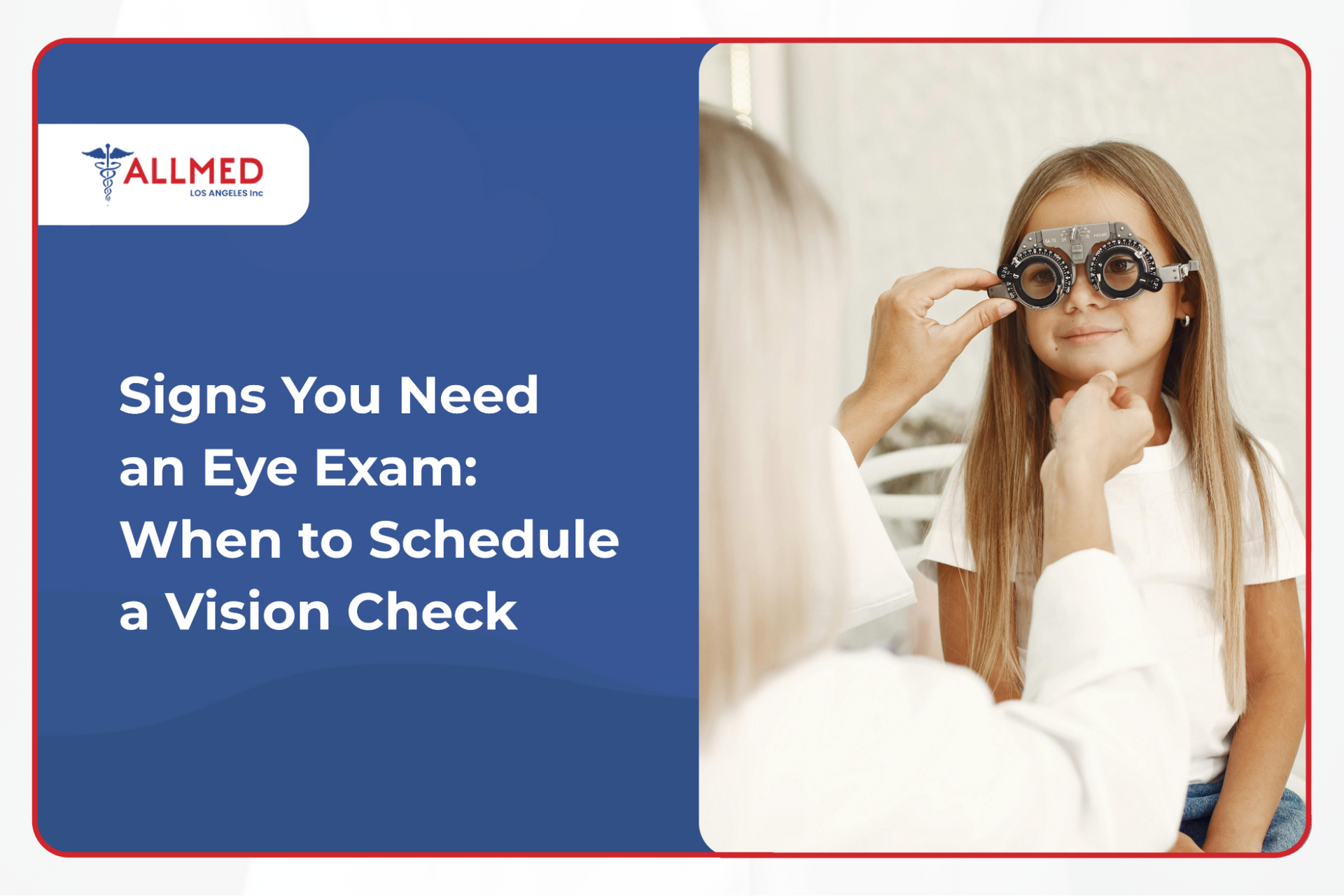
Kids can show these signs too, even if they don't know how to explain what they're experiencing. You might notice them sitting unusually close to the TV, squinting at the board, or avoiding reading.
And if you're older, don't automatically assume a change in your vision is "just part of getting older." Some changes are normal, while others are worth having checked.
When Should You Get an Eye Exam? A Simple Guide by Age
There's no single schedule that works perfectly for everyone. How often you need an eye exam can depend on your age, vision, overall health, family history, and other risk factors.
If you wear contacts, don't skip your contact lens eye exam just because your vision seems fine. Your eyes can change even when you don't notice anything different.
If you're already thinking, "I can't remember the last time I had my eyes checked," that's probably a good reason to look into it. You can learn more about Allmed LA's eye care services or talk with our team about what type of exam may be right for you.
And don't forget about everyday summer eye care. Sunglasses that provide UV protection can help protect your eyes when you're spending time outside. The CDC recommends sunglasses that block at least
99% of UVA and UVB rays.
If you have diabetes, eye exams are especially important because diabetes can affect the blood vessels in your eyes.
Emergency vs. Routine Check: When to Go Now vs. Schedule Later
Not every eye problem means you need emergency care. But some changes shouldn't wait.
Here's a simple way to think about it:
Sudden vision loss, severe eye pain, or a serious eye injury shouldn't be something you wait out at home. The CDC also recommends
seeking professional care for changes such as decreased vision, eye pain, flashes, floaters, halos, or double vision.
If you're not sure how serious something is, it's okay to ask. Calling your provider's office can help you figure out whether you need urgent care or a regular appointment.
Make Your Eye Health a Priority at Allmed LA
Your eyes don't always make a big fuss when something changes. Sometimes it's just more squinting, frequent headaches, or that feeling that your eyes are tired all the time. These small changes are worth paying attention to.
Knowing the signs you need an eye exam can help you decide when it's time to stop guessing and get some answers. A comprehensive eye exam can check your vision and give your provider a closer look at your overall eye health.
At
Allmed LA, we want eye care to feel simple, comfortable, and easy to understand. Whether you've noticed a recent change in your vision or it's simply been a while since your last exam, our team is here to help you understand what your eyes need.
Your Eye Health Deserves a Closer Look
Frequently Asked Questions
What are the most common signs you need an eye exam?
Blurry vision, frequent headaches, eye discomfort, trouble focusing, squinting, and changes in how you see light can all be reasons to consider an eye exam. If something is new, persistent, or getting worse, it's worth talking with an eye care professional.
How much does an eye exam typically cost?
Eye exam cost can vary depending on the type of exam, your provider, and your insurance coverage. If you're unsure what to expect, our Allmed LA team can help you understand your options.
When is an eye issue an emergency versus routine?
Sudden vision loss, severe eye pain, flashes of light, or a sudden increase in floaters should be taken seriously and may need prompt medical attention. Mild dryness or occasional blur may be appropriate for a routine visit, depending on what's causing it.
How often should contact lens wearers get an eye exam?
It depends on your vision, eye health, and contact lens needs. Your eye care provider can recommend how often you should come in for a contact lens eye exam.
Do children need eye exams before they show symptoms?
Yes. Children don't always realize that their vision isn't clear, so an eye exam can help catch problems before they start affecting reading, schoolwork, or everyday activities. The CDC also recommends appropriate vision screening for children. Learn more about children's eye health.
Can summer weather affect my eye health?
Spending more time outdoors means more exposure to UV rays, so sunglasses with proper UV protection are important. Dry or windy conditions can also make your eyes feel uncomfortable. Simple summer eye care habits can help.
Is eye strain from screens the same as needing new glasses?
Not necessarily. Spending a lot of time on screens can cause dryness, tired eyes, headaches, and trouble focusing. But if those symptoms keep happening, an eye exam can help determine whether there's an underlying vision problem or another reason for the discomfort.