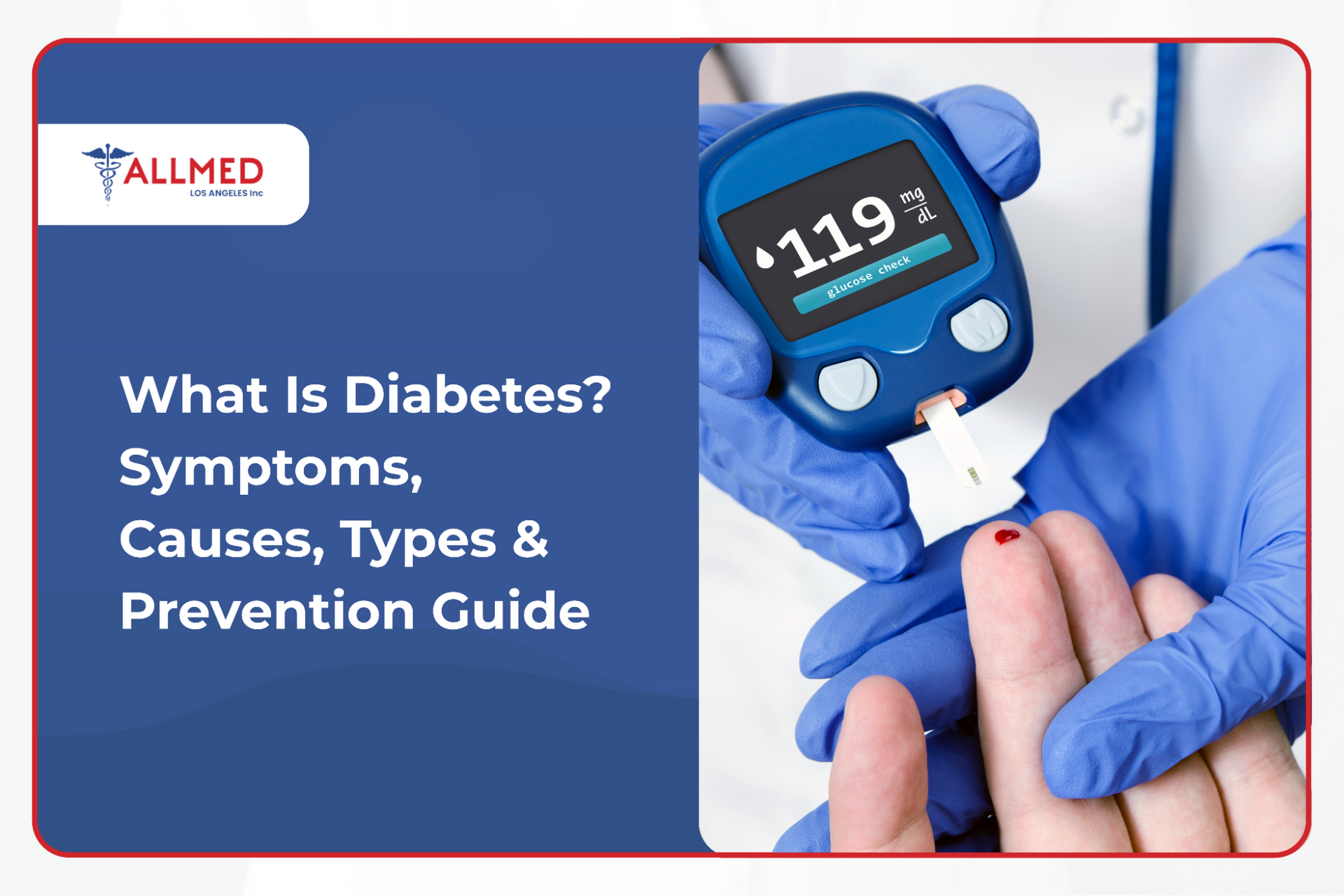
Think diabetes is largely caused by genetics? Think again. Genetics can have a great influence, but a major part of the blame can be given to the food we eat and the lifestyle we have.
That surprises a lot of people. So let's clear things up and really answer what is diabetes, and what is the diabetes disease at its core, in plain language you can actually use.
This guide covers the types, the signs, the causes, and what you can do starting today. And if you want real support along the way,
Allmed LA is right here in Los Angeles to help you every step of the way.
Know Your Risk and Take Action
What Is Diabetes?
So, what is diabetes exactly? It is a condition where your body struggles to manage blood sugar properly. Your blood sugar either stays too high or your body cannot use insulin the way it should.
Insulin is the hormone that moves sugar from your blood into your cells for energy. When this process breaks down, sugar builds up in your bloodstream instead. Over time, that buildup can damage your organs, nerves, and blood vessels.
Think of insulin like a key that unlocks your cells so sugar can enter. With diabetes, that key either goes missing or stops working right. The sugar has nowhere to go, so it just piles up.
Types of Diabetes
There are a few different types of diabetes, and knowing which one applies to you matters. Each type has its own causes and treatment approach. Let's break it down simply.
Type 1 is an autoimmune condition, meaning the body attacks its own insulin-producing cells. Type 2 is the most common form and often develops slowly over years. Curious about it? Read more about
Type 2 Diabetes and how early support makes a difference.
Common Signs of Diabetes
Recognizing the common signs of diabetes early can genuinely save your health. Some symptoms show up fast, while others creep in slowly over months. Here's what to watch for.
- Feeling extremely thirsty, even after drinking water
- Needing to pee more often, especially at night
- Feeling tired or drained for no clear reason
- Blurry vision that comes and goes
- Cuts or sores that heal slowly
- Unexpected weight loss, even without dieting
These symptoms are easy to brush off as stress or a busy schedule. But the
most common early warning signs are thirst, fatigue, frequent urination, and blurry vision.
That is exactly why they should not be ignored. Many people wait months before getting these symptoms checked out.
What Causes Diabetes?
So what causes diabetes in the first place? There is no single answer, since different types have different root causes. Genetics, lifestyle, and body chemistry all play a role.
Type 1 happens when the immune system mistakenly attacks insulin-producing cells in the pancreas. Researchers still aren't sure exactly why this happens in some people. It may involve genetics combined with an environmental trigger.
Type 2 develops differently. It is usually tied to insulin resistance, where your cells stop responding to insulin properly. Excess weight, inactivity, and poor diet often contribute to this resistance over time. Other
more serious cases are due to many complexities.
Gestational diabetes happens because pregnancy hormones can interfere with insulin function. It usually goes away after birth, but it raises future risk. Genetics alone rarely tells the full story, especially for type 2. Diet, activity levels, and body weight often carry just as much weight, sometimes more.
Risk Factors for Diabetes
Understanding the risk factors for diabetes helps you know where you stand. Some factors you can control; others you cannot. Let's look at both.
If diabetes runs in your family, your risk naturally goes up. That does not mean it is guaranteed, though. Lifestyle choices still matter a lot, even with genetics working against you.
Carrying extra weight, especially around the belly, increases insulin resistance significantly. Combine that with a sedentary lifestyle, and the risk climbs even higher. The good news is these factors respond well to change.
How Is Diabetes Diagnosed?
Wondering how is diabetes diagnosed? It usually starts with a simple blood test ordered by your doctor. No need to fear needles; it is quick and painless.
Doctors commonly use the A1C test, which shows your average blood sugar over three months. A fasting blood sugar test is another option, checked after not eating overnight. Sometimes both tests confirm the diagnosis together.
For gestational diabetes, pregnant women take a glucose tolerance test, usually between weeks 24 and 28. This involves drinking a sugary liquid, then checking blood sugar afterward. It sounds intense, but it only takes about an hour.
Getting diagnosed early truly changes the outcome. That is why a
primary care doctor near LA can be your first and most important step.
Diabetes Treatment Options
There are several diabetes treatment options available today, and no single plan fits everyone. Your doctor tailors treatment based on your type and severity. Let's walk through the basics.
For type 1, insulin therapy is essential since the body cannot produce it naturally. This may involve injections or an insulin pump worn on the body. Blood sugar monitoring becomes a daily habit.
Type 2 treatment often starts with lifestyle changes like diet and exercise. If that is not enough, doctors may prescribe medications like metformin. In some cases, insulin becomes necessary too.
Managing diabetes is not a one-time fix; it is an ongoing partnership with your care team. Regular checkups help catch complications before they become serious. That is exactly the kind of support
primary care services at Allmed LA are built for.
Can Diabetes Be Prevented?
Here's a hopeful question: can diabetes be prevented? For type 2 and gestational diabetes, the answer is often yes. Type 1 is different, since it cannot currently be prevented.
Losing even a small amount of weight can lower your risk significantly. Studies show that losing just 5 to 7 percent of body weight helps a lot. Combine that with regular movement, and your odds improve even more.
Eating a balanced diet full of vegetables, lean protein, and whole grains supports healthy blood sugar. Cutting back on sugary drinks and processed snacks makes a real difference too. Small, consistent changes beat drastic short-term diets every time.
Myth busted: eating sugar directly does not cause diabetes on its own. It is the overall pattern of diet, weight, and activity that matters most.
Healthy Lifestyle Tips for Managing Diabetes
Living well with diabetes comes down to daily habits, not perfection. These tips work whether you are managing diabetes or trying to prevent it. Consistency beats intensity every single time.
- Aim for at least 30 minutes of movement most days
- Fill half your plate with vegetables at meals
- Stay hydrated with water instead of sugary drinks
- Get 7 to 9 hours of sleep each night
- Check your blood sugar as often as your doctor recommends
- Manage stress through activities you actually enjoy
These small shifts are backed by solid research, not just good intentions. The CDC reports that losing just 5 to 7 percent of body weight through diet and activity changes lowers diabetes risk by 58 percent. Small shifts really do add up.
When Should You See a Doctor?
Not sure when you should see a doctor? If you notice any common signs of diabetes, do not wait it out. Early conversations with a doctor can prevent bigger problems later.
Seek emergency care immediately if you experience: extreme confusion, fruity-smelling breath, difficulty breathing, or loss of consciousness. These can signal diabetic ketoacidosis, a serious emergency. Call 911 or get to an ER right away.
For non-emergency concerns, like ongoing thirst, fatigue, or slow-healing wounds, schedule a visit soon. Waiting months to bring up symptoms only delays helpful answers. Curious what a first visit looks like? Check out this guide on your Primary Care Visit.
Foot related symptoms deserve extra attention too, especially numbness or slow-healing sores. Learn more about Early Detection of Diabetic foot issues before they escalate.
Allmed LA: Your Partner in Diabetes Care
Understanding diabetes means you do not have to be left guessing about your health. Whether you are managing symptoms, lowering your risk, or simply trying to learn more, having the right information can make things feel a little less overwhelming. And you do not have to figure it all out alone.
At Allmed LA, we know that hearing “diabetes” can bring a lot of questions and worry. Our Primary Care Provider team is here to listen, talk things through, and help you understand what is happening with your health. From screening to ongoing care, we will work with you to find an approach that fits your life.
Because good care is not just about writing a prescription, it is about listening to you, understanding your goals, and helping you take the next step with confidence.
Concerned about your risk for diabetes?
Frequently Asked Questions
What are the different types of diabetes?
The main types are type 1, type 2, and gestational diabetes. Prediabetes is not diabetes, but it means your blood sugar is higher than normal and may increase your risk of type 2 diabetes. At Allmed LA, our team can help you understand your risk and take steps toward better blood sugar management.
How is diabetes diagnosed?
Diabetes is usually diagnosed with a blood test, such as an A1C or fasting blood sugar test. Pregnant women may also take a glucose tolerance test for gestational diabetes. Allmed LA provides diabetes assessments and can help you understand your results and what to do next.
Can diabetes be prevented?
Type 1 diabetes cannot currently be prevented. However, type 2 diabetes can often be prevented or delayed through healthy eating, regular physical activity, and maintaining a healthy weight. Allmed LA can help you build healthy habits and stay on top of your preventive care.
When should I see a doctor for diabetes symptoms?
See a healthcare provider if you have ongoing thirst, frequent urination, fatigue, blurred vision, or slow-healing wounds. These may be signs of diabetes and should not be ignored. Allmed LA can provide testing and evaluation to help you understand what's causing your symptoms.
Is diabetes a lifelong condition?
Type 1 diabetes is lifelong. Type 2 diabetes usually requires ongoing management but can sometimes go into remission. Gestational diabetes often improves after pregnancy but can increase your risk of type 2 diabetes later. With Allmed LA's ongoing diabetes care, you can get support with monitoring, lifestyle changes, medications, and follow-up care.
Do you need a comprehensive eye exam if you have no vision problems?
Yes. You may have an eye condition without noticing any changes in your vision. Regular exams allow us to check your eye health and catch potential concerns early, even when everything feels normal.